
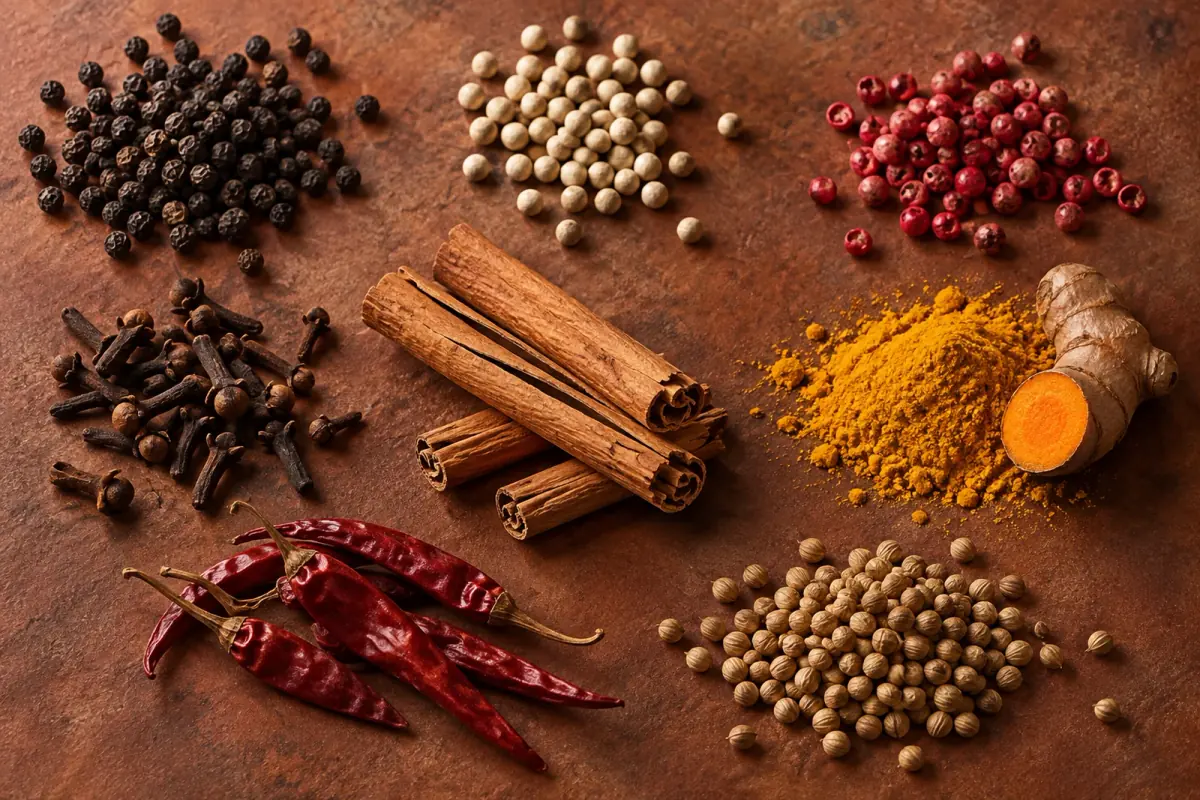
Choose an aroma,
let’s get to know it.
Each profile introduces a spice, its history and an idea for cooking with it.
01 / The spice notebook
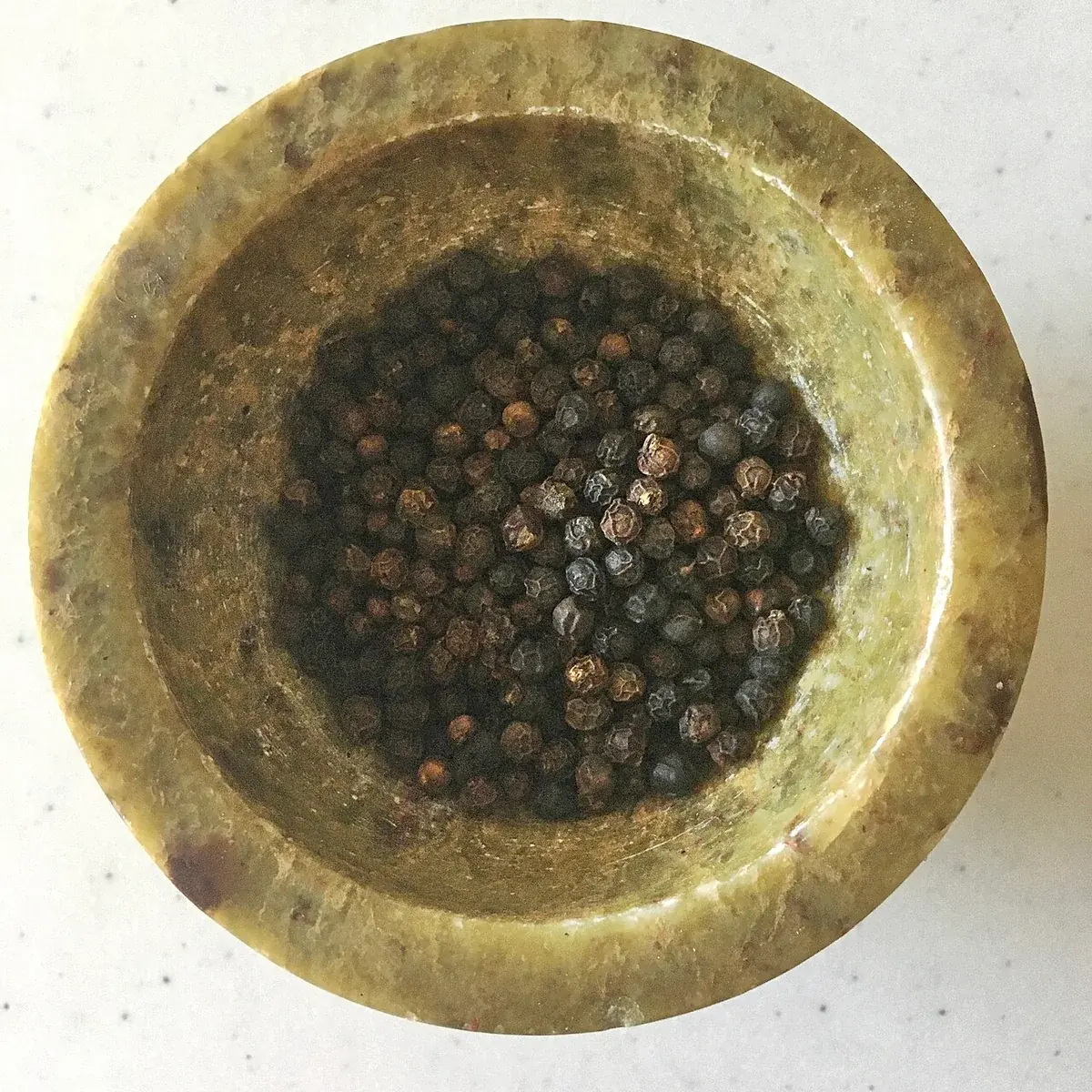
Black pepper
Piper nigrum · Piperaceae
A wrinkled grain, a turn of the mill, a familiar warmth.
Crush a few peppercorns and smell their aroma before seasoning. Black pepper keeps its outer skin; ripeness, processing and drying influence its nuances.
Organised cultivation around 1900
East coast, Nosy Be & Sambirano
Its history, regions & quality pointers
- Origin
- South Asia. Piper nigrum is a cultivated vine, distinct from Madagascar’s wild peppers. [3]
- Arrival on the island
- Around 1900, trials at Ivoloina accompanied the development of organised cultivation; this spread to Nosy Be in the 1920s. These dates do not prove when the pepper vine first appeared on the island. [2]
- Regions
- The humid east coast, with historic growing areas in Nosy Be and the Sambirano in the north-west. The FAO describes the eastern coastal plains as a pepper-producing area; this does not allow a current percentage to be assigned to each region. [5][2]
- Part used
- The fruit is dried with its outer skin, which wrinkles and darkens during processing: black, white and green are different ways of preparing Piper nigrum, not three species. [1]
- On the palate
- Peppery warmth and an aromatic fragrance whose nuances vary with the batch, ripeness and drying. [4]
- In the kitchen
- Crush for marinades or grind just before serving over meat, vegetables, a sauce or roasted fruit.
- Quality pointers
- Compare clean peppercorns, a clear aroma and a documented origin. Size alone does not define quality. [1]
02 / The spice notebook
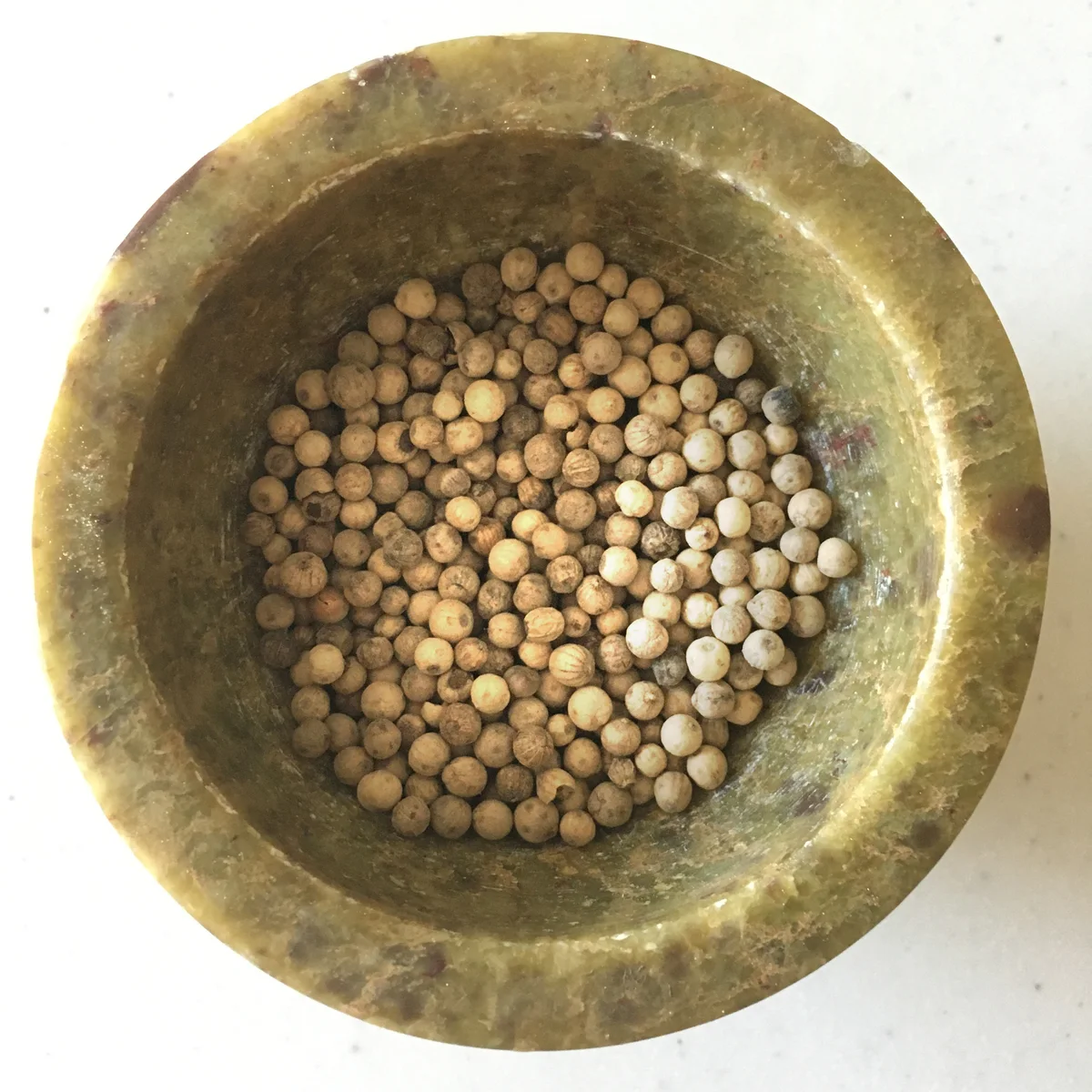
White pepper
Piper nigrum · Piperaceae
The grain looks different; its aroma deserves a fresh encounter.
Try it in mashed potatoes or a light sauce. White pepper comes from the same vine as black pepper, without its outer skin. Its subtle colour does not mean a faint flavour.
The story of the same pepper vine
Piper nigrum growing areas: east & north-west
Its history, regions & quality pointers
- Origin
- The same South Asian pepper vine as black pepper. A difference in colour can therefore reflect post-harvest work rather than a different plant or country. [3]
- Arrival on the island
- It shares the history of cultivated pepper in Madagascar, whose agricultural expansion is documented around 1900. The sources consulted establish no separate date for the introduction of white-pepper processing. [2]
- Regions
- Piper nigrum growing areas on the east coast and in the north-west; the specific distribution of white pepper is not established. [2]
- Part used
- Fruit whose outer skin is removed before final drying. Depending on the method, this involves soaking, controlled fermentation or mechanical removal of the skin. [1][4]
- On the palate
- A peppery character with a different profile from black pepper, its nuances depending on processing. [4]
- In the kitchen
- Useful in a light sauce, mash or fish dish when its aroma and a visually discreet grind are wanted. Start with a small amount, then adjust.
- Quality pointers
- Removing the skin and drying matter as much as harvesting. A mouldy or rancid smell is a defect; a very pale white is not a selection criterion on its own. [1][4]
03 / The spice notebook
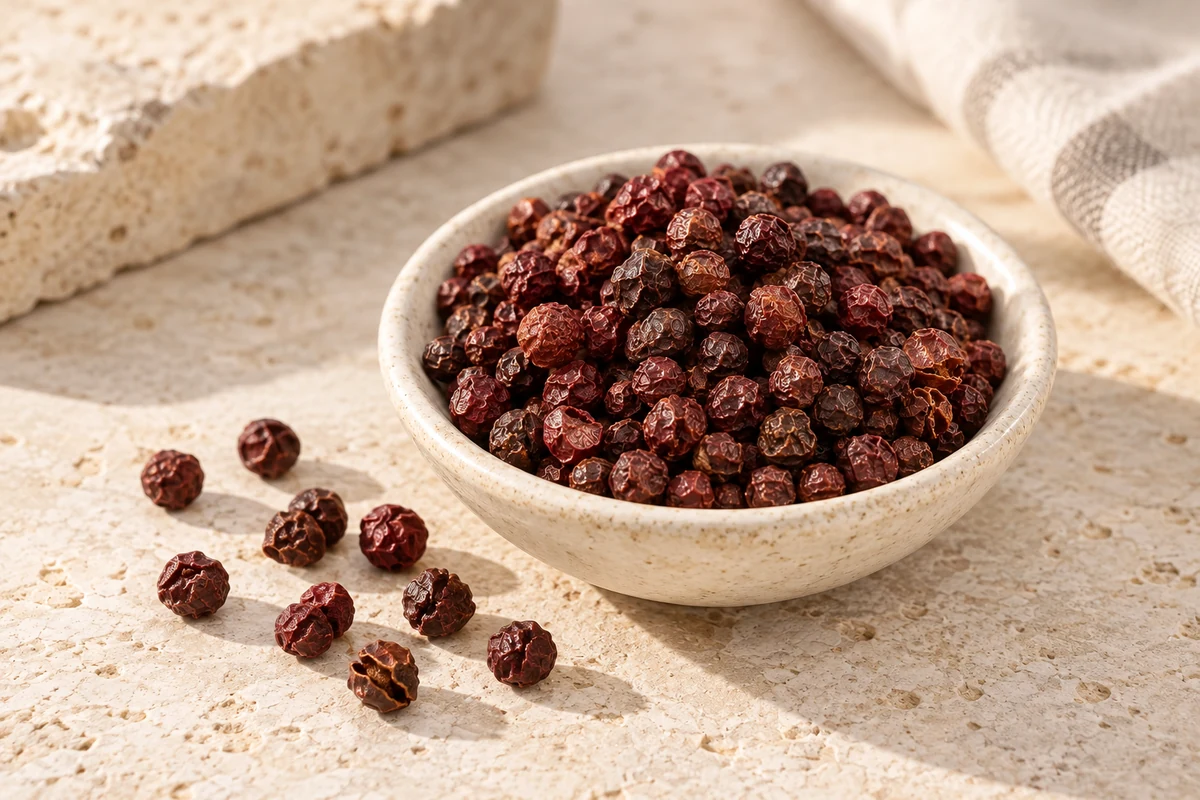
Garnet pepper
Trade designation to clarify for each batch
Under the name garnet, peppercorns whose aroma is still to be discovered.
“Garnet” is a trade name: it specifies neither the species nor the processing. To understand its aroma, ask about the batch and taste it.
A trade designation
Batch origin to be clarified
Its history, regions & quality pointers
- Origin
- “Garnet” is a trade designation, not a species or a universal grade. [1]
- Arrival on the island
- No introduction date specific to this name has been established.
- Regions
- The batch’s harvesting region remains to be clarified.
- Part used
- Fruit sold as pepper; species and processing to be confirmed.
- On the palate
- Colour alone does not predict aroma or heat.
- In the kitchen
- Compare with black and white pepper, in small amounts, on a simple food.
- Quality pointers
- Look for the botanical identity and batch traceability. The Codex standard distinguishes black, white and green, without defining “garnet”. [1]
04 / The spice notebook
Voatsiperifery
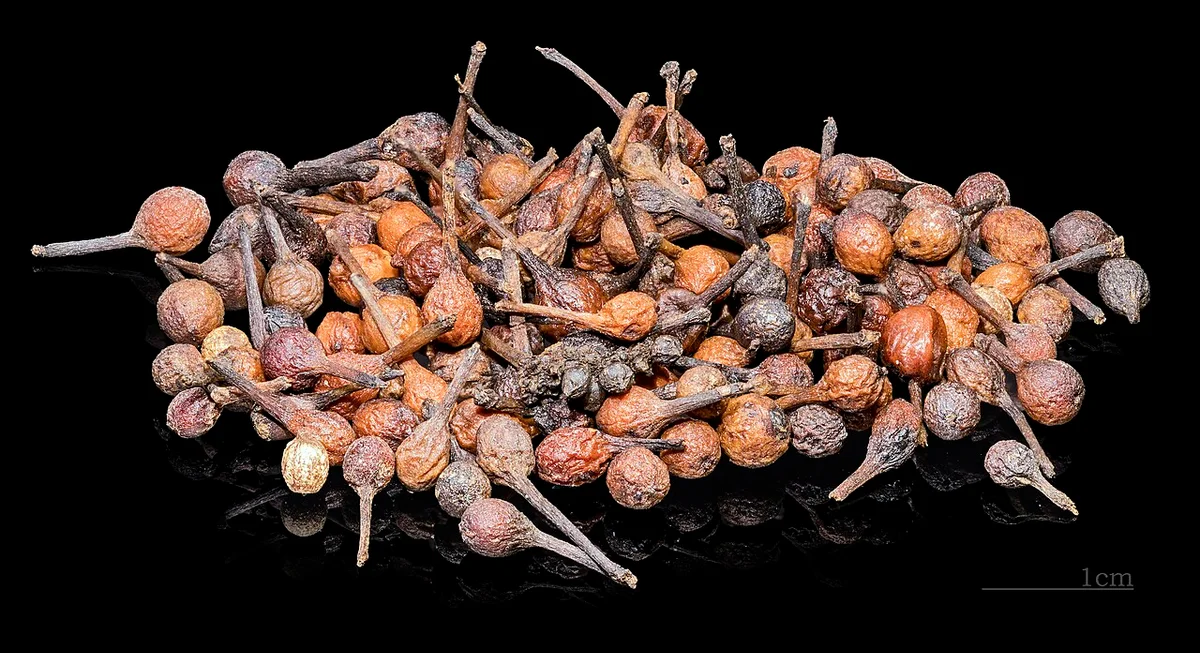
Piper spp. · Piperaceae · botanical identity to distinguish from Piper borbonense
A little tailed peppercorn to change a dish’s aroma.
Try a few peppercorns on a roasted mushroom or a chocolate bite. Wood, earth and fruit are notes to explore; each harvest retains its own nuances.
A plant from Madagascar’s forests
Eastern humid forests
Its history, regions & quality pointers
- Origin
- A spice from vines endemic to Madagascar. The name Piper borbonense remains common in trade, but in 2024 Cirad emphasised that identifying it with Réunion’s pepper does not fit the identity of Madagascan tsiperifery. [6]
- Arrival on the island
- It was not introduced as a foreign plant. Local uses predate its international culinary reputation, which grew rapidly in the 2000s and then around 2010. [6]
- Regions
- Natural humid forests in the east, from the coast to the inland hills. This is a broad ecological area; gathering zones vary and should not be equated with a single commercial terroir. [6]
- Part used
- Small fruits borne on climbing vines, usually recognisable by their short stalk after drying. [6]
- On the palate
- Woody, earthy and fruity notes. Ripeness at harvest and post-harvest treatments significantly affect the result. [7]
- In the kitchen
- Try it crushed over fish, mushrooms, roasted vegetables or chocolate. Adding it at the end makes aromas easier to compare.
- Quality pointers
- Prioritise sorting, controlled drying and known gathering practices. Uprooting vines or felling their support trees destroys the resource for future harvests. [6][7]
05 / The spice notebook
Pink peppercorns
Schinus terebinthifolia · Anacardiaceae
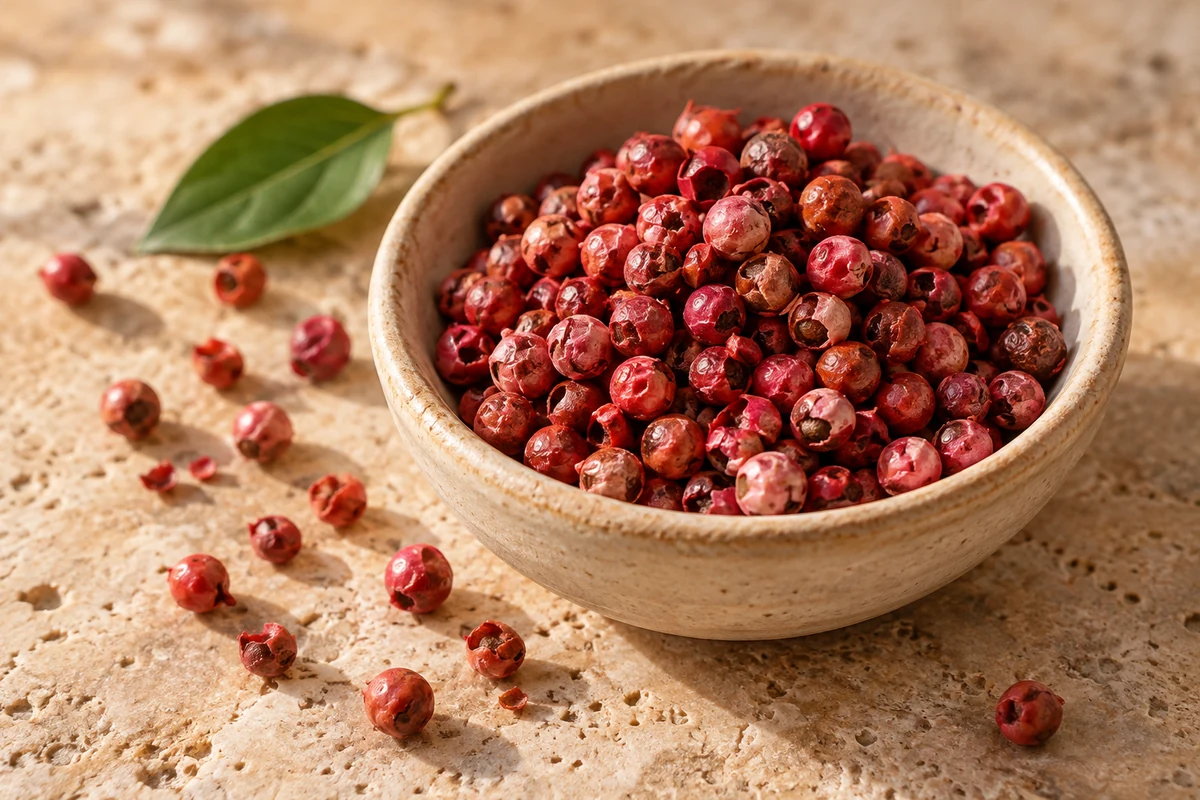
Little pink berries, a gentle touch on the plate.
Crush a few berries over fresh cheese. Mildly pungent and slightly sweet, they bring as much aroma as colour.
Cultivated since the 1940s–1950s
Bongolava, Itasy, Anosy & DIANA
Its history, regions & quality pointers
- Origin
- South America. Pink peppercorns of this species come from a tree related to the cashew; the name “pink pepper” should not lead them to be confused with vines of the genus Piper. [10]
- Arrival on the island
- GIZ dates the start of cultivation in Madagascar to the late 1940s and the 1950s, with the settlement of Creole colonists west of Antananarivo. This refers to documented cultivation, not necessarily the first tree on the island. [8]
- Regions
- Bongolava and Itasy are the historic growing areas cited. The sector later developed in Anosy from the 2000s; plantations and projects are also documented in DIANA, particularly around Ambanja and Ambilobe. [8]
- Part used
- Small fruits harvested ripe, then dried and sorted. Their pink skin is fragile, making careful handling important. [9]
- On the palate
- An aromatic, slightly sweet fragrance, with limited heat compared with black pepper. [9]
- In the kitchen
- Lightly crush over fish, salad, fresh cheese or a fruit dessert. They add an aromatic nuance as well as colour.
- Quality pointers
- Choose a clean, fragrant batch with sufficiently intact berries. A striking colour is no substitute for knowing the harvest and storage conditions. [26]
06 / The spice notebook
Cinnamon
Cinnamomum verum, synonym C. zeylanicum · Lauraceae
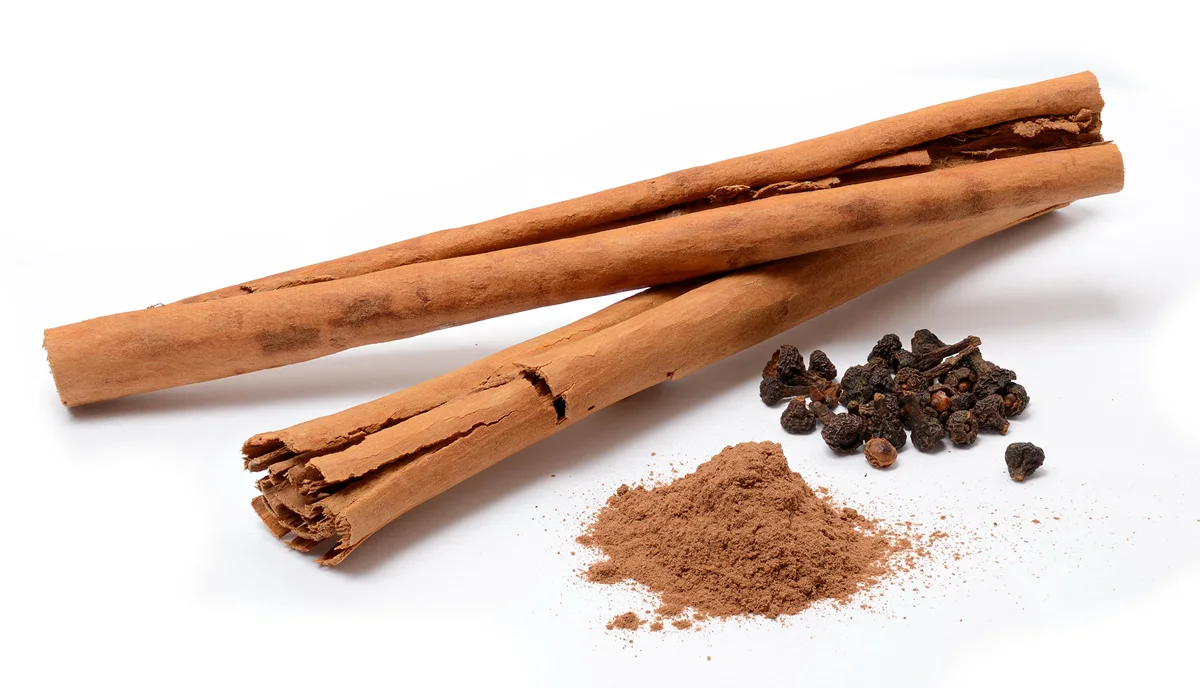
Rolled bark, a warm aroma, several ways to cook.
Cinnamon is prepared bark. Infuse a stick with apples or rice, or mix it ground into a batter: it works in both sweet and savoury dishes.
Toamasina, Mahanoro, Mananjary & Maroantsetra
Its history, regions & quality pointers
- Origin
- Sri Lanka for Cinnamomum verum, according to Kew. So-called Ceylon cinnamon is also grown in Madagascar; its botanical name describes the plant, not necessarily the country of harvest. [11][12]
- Regions
- The EDBM fact sheet places the main growing areas on the east coast: Toamasina, Mahanoro, Mananjary and Maroantsetra. These places describe the geography of production, without a recent numerical ranking between them. [13]
- Part used
- Inner bark, prepared then dried, sold as sticks, pieces or powder. The leaves can provide an essential oil, but are not the spice sold as sticks. [12]
- On the palate
- A warm, aromatic fragrance. Cassia-type cinnamons come from other species of the genus Cinnamomum; distinguishing species is more useful than judging all cinnamon by colour alone. [12]
- In the kitchen
- Infuse a stick in milk, compote or sauce; use powder in cake batter or a spice blend. Cinnamon also suits savoury dishes.
- Quality pointers
- To choose your cinnamon, examine the bark and its aroma. Thickness, form and fineness of grinding help determine its uses in cooking. [12]
07 / The spice notebook
Cloves
Syzygium aromaticum · Myrtaceae
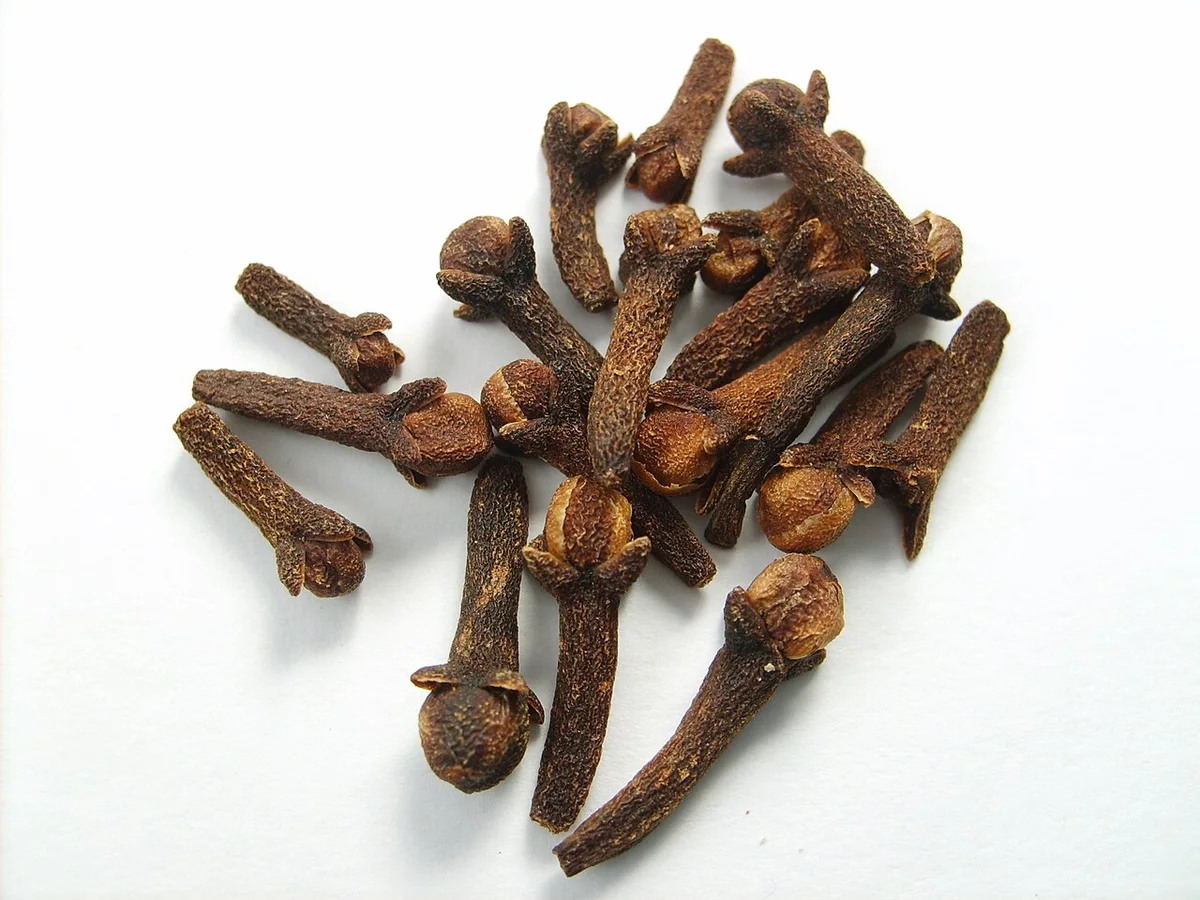
A tiny flower bud, an aroma that makes its presence felt.
This little clove was once a flower bud. Its intense aroma adds depth to a broth or compote. Add it gradually and taste as you cook.
Sainte-Marie, 1820s
Analanjirofo & east coast
Its history, regions & quality pointers
- Origin
- The Moluccas, in present-day Indonesia. The clove tree is tropical, and the spice is neither a seed nor a fruit: the flower bud is harvested before it opens. [14]
- Arrival on the island
- Early 19th century. Historical studies describe introductions to Sainte-Marie in the 1820s and give 1827 as the start of organised cultivation. Dates vary depending on whether they refer to the first plants or plantations. [15]
- Regions
- The east coast, particularly Analanjirofo, is the major growing area described in Cirad’s work. Sainte-Marie holds an important historical place in this spread. [14]
- Part used
- A dried flower bud shaped like a little nail. Distilling the leaves supplies a separate sector: clove essential oil. [14]
- On the palate
- An intense, warm aroma, powerful enough to quickly dominate a blend if too much is used. [16]
- In the kitchen
- A few whole cloves in broth, marinade or compote, removed before serving. Small amounts of ground cloves work in biscuits and spice blends.
- Quality pointers
- Look for well-formed buds and a properly sorted batch. Stems, broken cloves and foreign matter should be limited; aroma and drying complement the visual assessment. [16]
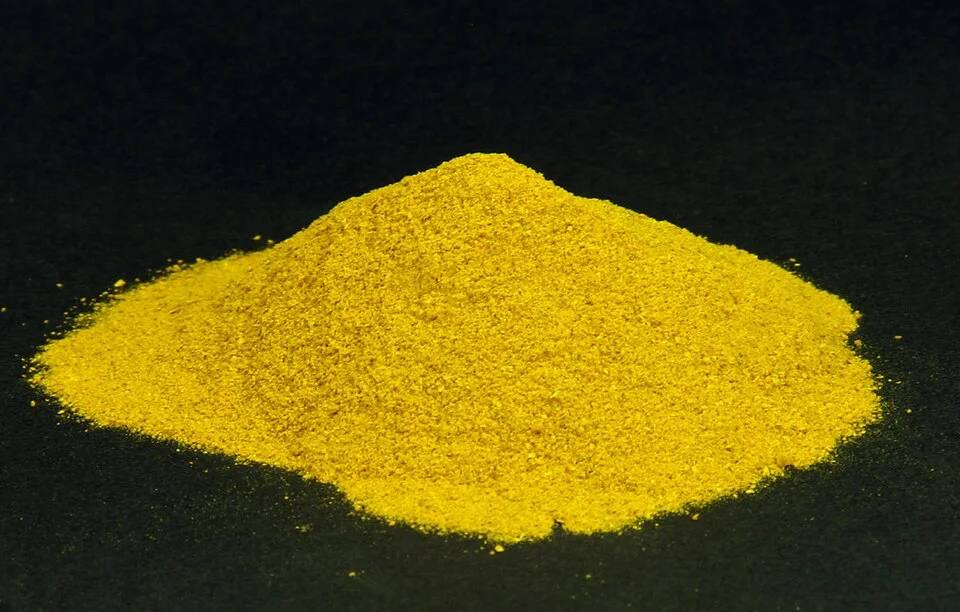
08 / The spice notebook
Turmeric
Curcuma longa · Zingiberaceae
Underground, a rhizome that brings yellow to the kitchen.
Add a small pinch to rice or lentils. Turmeric brings its yellow colour and an earthy, slightly bitter note; adjust to taste.
Commercial expansion in the 1980s
Anivorano-Est, Brickaville district
Its history, regions & quality pointers
- Origin
- A plant domesticated in South Asia, linked to a very long agricultural history in India. The part used is a rhizome, an underground stem, as with ginger. [18]
- Arrival on the island
- A Ministry of Agriculture study mentions a longstanding presence on the east coast and distinguishes a much more recent turning point: commercial cultivation developed in Anivorano-Est in the 1980s, followed by sales of dried slices in the 1990s. [17]
- Regions
- Anivorano-Est, in Brickaville district, Atsinanana, is a specifically documented growing area. This commune should not be confused with other Madagascan places called Anivorano. [17]
- Part used
- Fresh rhizome, dried slices or powder. Washing, cutting, drying and grinding are separate processing stages. [17]
- On the palate
- An earthy, warm and slightly bitter flavour, with a particularly strong yellow-to-orange colouring effect. [18]
- In the kitchen
- For rice, vegetables, lentils, a sauce or a spice blend. A small amount is enough to add colour; increase it according to the flavour you want.
- Quality pointers
- When choosing turmeric, look at its ingredients and origin. Its colour and aroma help guide your recipe choices. [18]
09 / The spice notebook
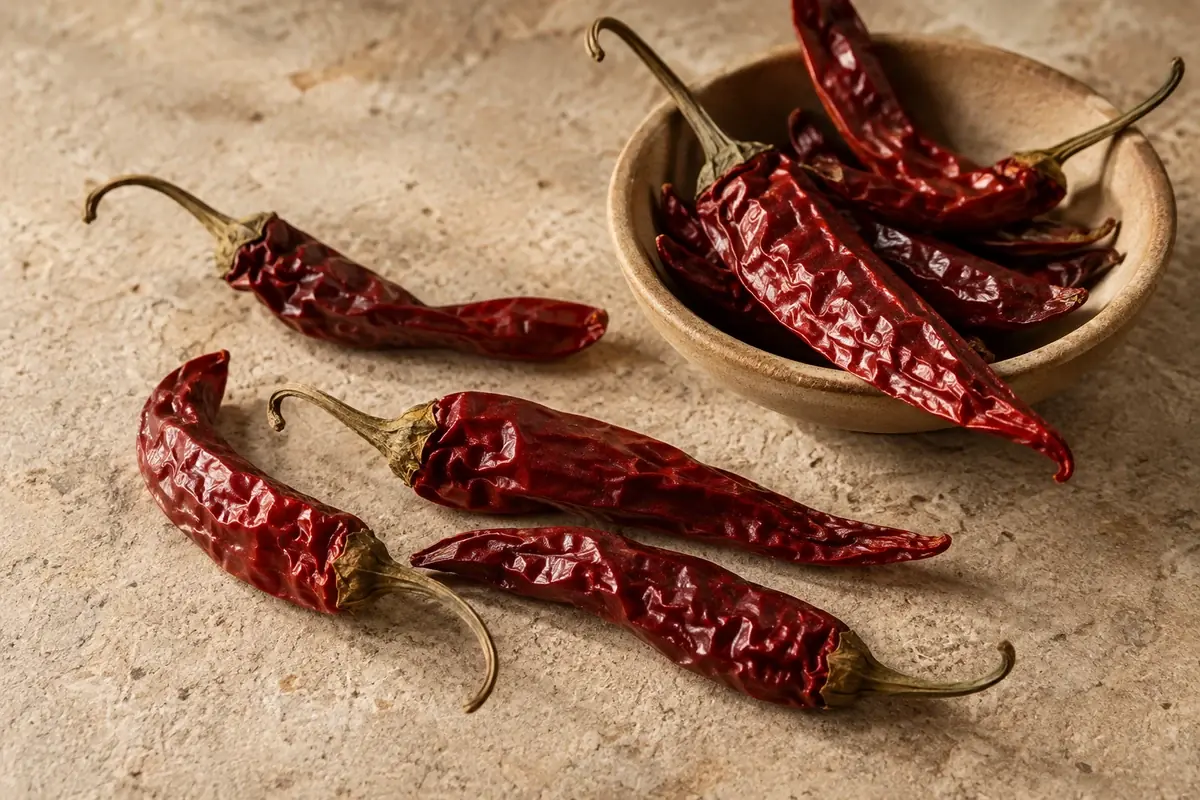
Pili-pili
Capsicum spp. · Solanaceae · species to be specified for each batch
A small fruit for those who like to spice up their plate.
Make a sauce with a little pili-pili, taste, then serve it separately so everyone can season their own plate.
Chillies in general: east, west & highlands
Its history, regions & quality pointers
- Origin
- Chillies of the genus Capsicum originate in the Americas. “Pili-pili” is a common name: it does not reliably identify a species, cultivar or consistent heat level. [21]
- Regions
- For chillies in general, EDBM cites Atsinanana, Alaotra-Mangoro and Analanjirofo in the east, Boeny in the west, and Vakinankaratra and Analamanga in the highlands. These data are not a ranking specific to pili-pili. [19]
- Part used
- Fruit used fresh, dried whole, crushed, ground or incorporated into a preparation. The form sold affects how easily it can be dosed. [20]
- On the palate
- Variety and processing affect heat. Taste a small amount, then adjust the dose. [20]
- In the kitchen
- Add gradually to a rougail, marinade or sauce served separately, allowing everyone to choose their own intensity.
- Quality pointers
- Choose well-dried chilli with a clear aroma. Taste a small amount to adjust the dose to your dish. [26]
10 / The spice notebook
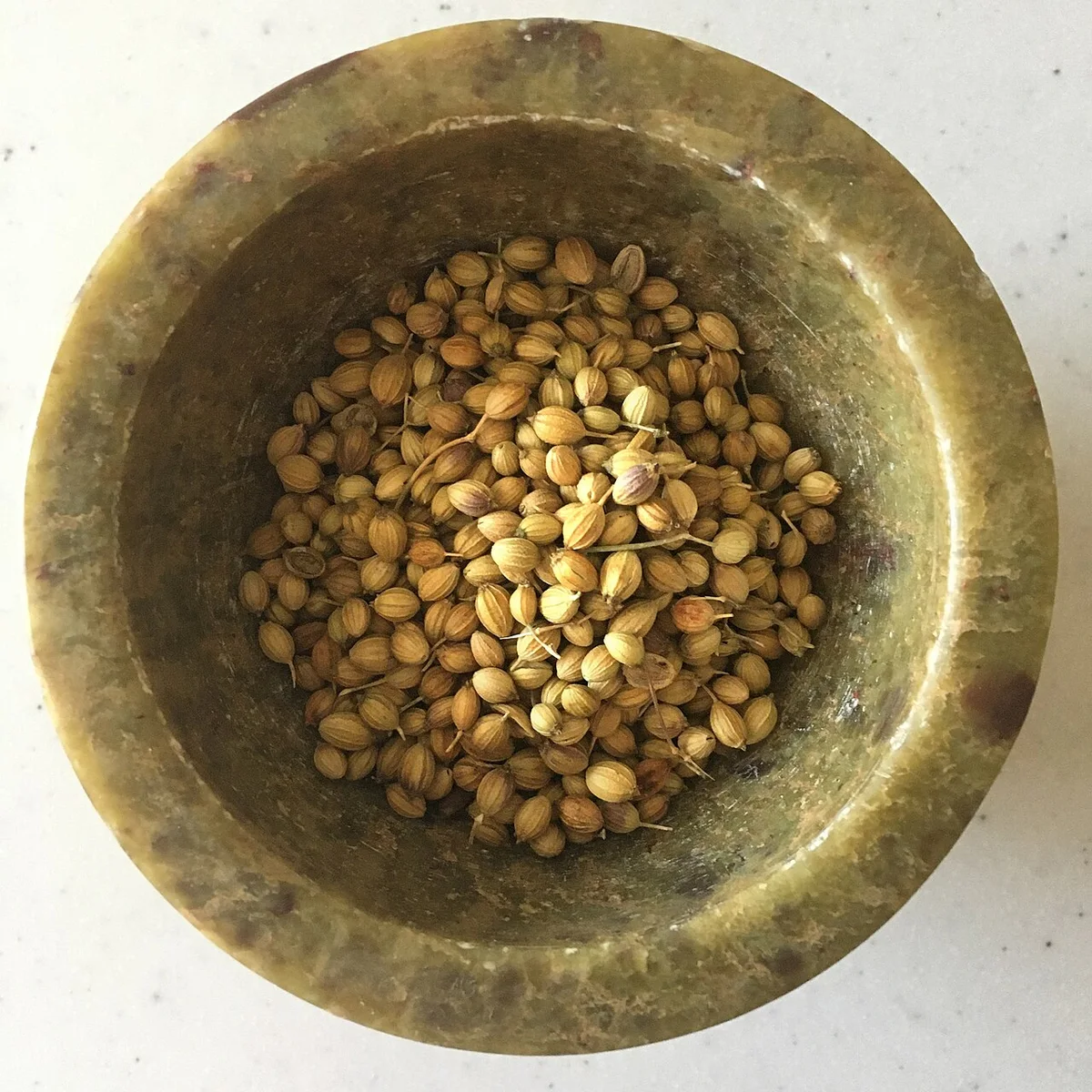
Coriander
Coriandrum sativum · Apiaceae
A few crushed seeds, citrus notes to discover in a different way.
Coriander seeds are small dried fruits with citrus notes, different from the leaves. Crush them for a marinade or blend.
Its history, regions & quality pointers
- Origin
- From the eastern Mediterranean to western Pakistan, according to Kew. This annual plant belongs to the same botanical family as parsley, cumin and carrots. [22]
- Regions
- The selected data establish no dominant growing area in Madagascar. Some statistics group coriander, anise, star anise and fennel together: that total must not be presented as coriander production alone.
- Part used
- The culinary “seeds” are botanically dried fruits. Fresh leaves serve as a herb and have a different aroma: they are not interchangeable in equal quantities. [23]
- On the palate
- Crushed fruits develop warm, slightly sweet citrus notes. The leaves have a much more vivid green character. [23]
- In the kitchen
- Whole fruits for marinades or pickled vegetables; ground fruits for curry or a homemade blend. Light toasting can change the aroma; try it in a small amount.
- Quality pointers
- Crush a few seeds to discover their aroma and compare the uniformity of the batch. Agricultural origin adds another useful detail.
11 / The spice notebook
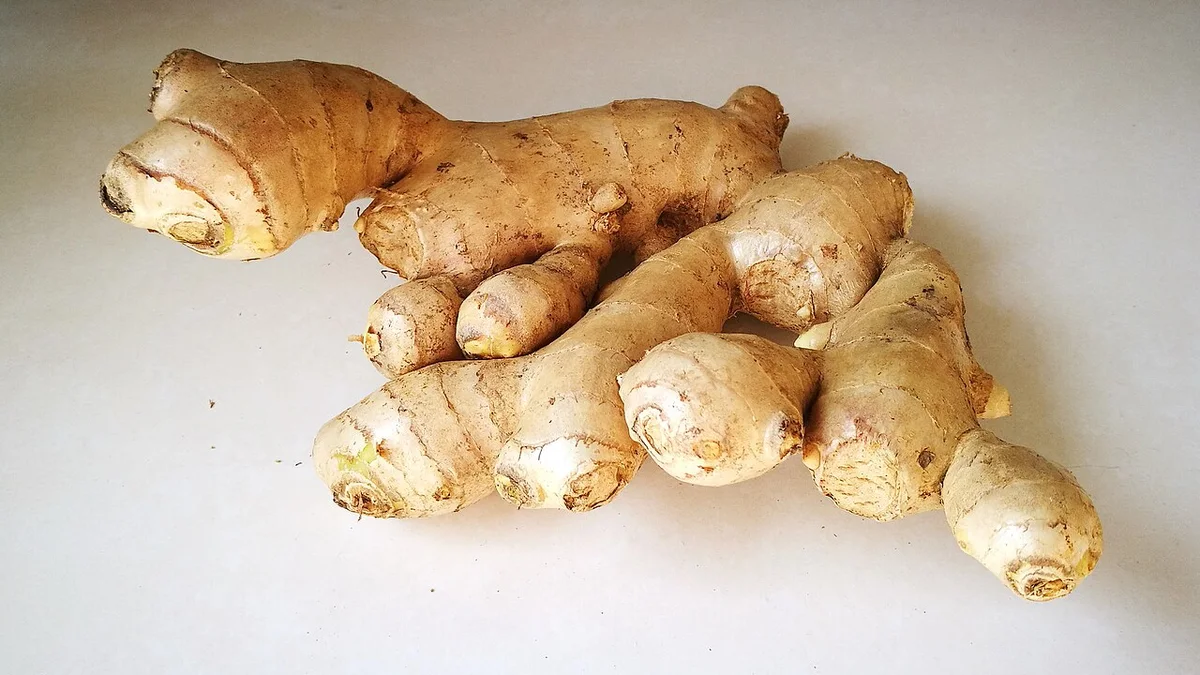
Ginger
Zingiber officinale · Zingiberaceae
A knobbly rhizome, lively heat and lemony notes.
Sliced, grated or powdered: choose according to the dish. Fresh and dried ginger give different results; try them separately.
Atsinanana & Analanjirofo
Its history, regions & quality pointers
- Origin
- Asia. Kew’s botanical database places its native range from the eastern Himalayas to south-central China; its long cultivation history explains its current presence in many tropical countries. [24]
- Regions
- Documented east-coast production includes Atsinanana and Analanjirofo. Development documents mention the Mitsinjo cooperative, around Anivorano-Est, alongside turmeric. [25]
- Part used
- A branching rhizome, used fresh or dried. It is an underground stem, although the word “root” is common in cooking. [24]
- On the palate
- A bright, lemony fragrance with pungent warmth. Fresh and dried forms do not give exactly the same result in a dish. [24]
- In the kitchen
- Grate into a marinade, cut into thin slices for a culinary infusion or add ground ginger to cake batter. Combining it with garlic or citrus makes simple preparations possible.
- Quality pointers
- For fresh ginger, examine the rhizome’s firmness and condition; for dried ginger, compare aroma and fineness of preparation. This profile describes a spice grown on the island without announcing its availability in the catalogue.
The plants’ journeys,
their roots here.
Madagascar’s spices bring together several histories: clove trees introduced in the 19th century, the expansion of cultivated pepper around 1900, the more recent development of pink peppercorns and the local presence of voatsiperifery vines. A plant’s arrival, its cultivation and its first exports do not necessarily coincide. [14][2][8][6]
What do the dates refer to?
The profiles distinguish a plant’s arrival from the expansion of its cultivation and identify where its first presence remains unknown.
From one region to another,
follow the aromas.
The map locates growing areas documented by the cited sources. [5]
2Analanjirofo & Sainte-Marie
A major clove-growing area, linked to introductions in the 19th century. [14]
4North-west
Nosy Be and the Sambirano for the history of pepper; DIANA also for pink peppercorns. [2][8]
5Bongolava & Itasy
The earliest pink-peppercorn growing areas cited in the sources. [8]
6Anosy
In the south-east, a pink-peppercorn sector developed since the 2000s. [9]
Families to get to know,
differences to discover.
Black, white, green
Black, white and green come from Piper nigrum. Fruit ripeness and processing make the difference.
Pink peppercorns have their own family
Pink peppercorns come from Schinus, a tree in a different family from pepper vines.
Meeting the forest peppers
Voatsiperifery are wild Madagascan vines of the genus Piper, distinct from cultivated pepper.
Rhizomes and bark in the kitchen
With turmeric and ginger, we cook with an underground stem; with cinnamon, bark. The botanical name helps distinguish cinnamon from cassia in particular.
Detailed botanical references are included in the profiles above.
Keep the aromas
until the next recipe.
Quality also develops after harvest
Ripeness, sorting, drying, cleanliness and storage influence the final product. A beautiful colour or large size does not tell the whole story. To compare two spices, consider botanical identity, the form sold, harvest origin and aromatic freshness. Certification, grade or year claims must correspond to the batch presented. [26][4]
Preserving aroma in a humid climate
Keep spices in a clean, tightly closed container, away from moisture, heat and light. Use a dry spoon and avoid opening the jar over steam from a pan. Buying an amount suited to your consumption helps keep supplies turning over. A faded aroma and a mouldy smell are not the same problem: the latter indicates product deterioration. [26]
Other aromas to discover.
Cocoa and coffee are aromatic products that can be paired with spices, but they have distinct production chains. The Sambirano is a studied cocoa-growing area, where fermentation and drying contribute to quality. Culinary lemongrass belongs among aromatic herbs: its above-ground parts flavour preparations. These similarities in taste do not justify treating all plants as one species or giving them the same history. [27][5][28]
Continue with the feature on vanilla. From orchid to fragrant pod →
Explore further 28 historical & botanical references
Feature checked on 22 September 2026. The numbers throughout the text refer to the sources below. The regions described locate growing areas; each batch’s origin is checked separately.
- FAO / WHO · Standard for black, white and green peppers, CXS 326-2017
- Madadoc archives · Main agricultural products: pepper
- Kew, Plants of the World Online · Piper nigrum
- Shango et al., 2021 · Pepper quality before and after harvest, FAO AGRIS record
- FAO / WFP, 2010 · Crop assessment in Madagascar, crop geography
- Cirad, 2024 · Voatsiperifery, Madagascar’s wild pepper
- Weil et al., Fruits, 2014 · Post-harvest treatments of wild pepper in Madagascar
- Ministry of the Environment / GIZ, 2024 · Good practices, pink-peppercorn chapter
- PIC 2.2 project, 2018 · Pink-peppercorn production in the Anosy region
- Scientific study, 2021 · Diversity of Schinus terebinthifolia in Brazil’s Atlantic Forest
- Kew · Cinnamomum verum, origin and nomenclature
- Kew · Cinnamon, a festive favourite: bark, types and processing
- Economic Development Board of Madagascar · Cinnamon sector fact sheet
- Danthu et al., 2014 · Madagascar’s clove tree: a successful introduction, a future to build
- Levasseur et al., 2012 · Clove-based farming systems in Sainte-Marie
- FAO / WHO · Standard for dried floral parts: cloves, CXS 344-2021
- MINAGRI / PPRR, 2011 · Marketing turmeric in Anivorano-Est
- Kew · Curcuma longa: domesticated plant, rhizome and culinary uses
- Economic Development Board of Madagascar · Pili-pili sector fact sheet
- Rural Income Promotion Programme · Chilli sector summary
- FAO Ecocrop · Capsicum annuum: origin and cultivation
- Kew · Coriandrum sativum: native range
- FAO / WHO, 2024 · Scientific dossier on coriander, Annex VIII
- Kew · Zingiber officinale: origin, rhizome and aromas
- EDBM, Investing in Madagascar, 2018 · Fanohana and Mitsinjo sectors, pages 20–21
- FAO · Quality assurance for herbs and spices: harvesting, drying, sorting and storage
- Descroix et al., 2016 · Cocoa farms of the Sambirano, quality and processing
- Kew · Lemongrass, botanical names and parts used
About the visuals & map
The editorial compositions were created with AI assistance. Retained photographs are credited below; their locations are given where documented.
- Black peppercorns, Kerala (India). · Misterneedlemouse · CC0. WebP format and display crop.
- White peppercorns, Kerala (India). · Misterneedlemouse · CC0. WebP format and display crop.
- Cinnamomum verum sticks from Sri Lanka. · Simon A. Eugster · CC BY-SA 3.0. WebP format and display crop.
- The dried flower buds of the clove tree. · Jorge Barrios · Public domain. WebP format and display crop.
- The intense yellow of ground turmeric. · Elke Wetzig (Elya) · CC BY-SA 3.0. WebP format and display crop.
- Dried coriander fruits, Gujarat (India). · Misterneedlemouse · CC0. WebP format and display crop.
- Ginger is a rhizome. · Malcolm Koo · CC BY-SA 4.0. WebP format and display crop.
- Voatsiperifery from Fianarantsoa. Collection of the Muséum de Toulouse. · Didier Descouens · CC BY-SA 4.0. WebP format and display crop.
Base map: Natural Earth, public domain. The markers locate the places mentioned and do not represent cultivated areas.